


Auger vs. Pintle Chain: Which Hopper Spreader Feed System Is Right for You?
Choosing between an auger and pintle chain hopper spreader comes down primarily to the material you spread, the conditions you operate in, the amount of material you need to move, and how much maintenance you're willing to perform. In general, auger feed systems are a strong choice for dry, free-flowing salt and operators who prioritize consistent material flow and simpler maintenance. Pintle chain systems are better suited for higher-volume applications and materials such as sand, salt/sand mixes, and wetter material.
BOSS offers both auger and pintle chain feed systems across its hopper spreader lineup, with the VBX+ offering both options and the MBX+ featuring a pintle chain-only system. The MBX+ is designed for professional, commercial and municipal applications where high-capacity material output is a priority. For compact equipment, the VBX 3000 is an auger-feed hopper spreader designed specifically for UTVs.
Quick Answer
Should I choose an auger or pintle chain spreader feed system?
Choose an auger if you primarily spread dry, free-flowing salt and want a simpler feed system with consistent material flow. Choose a pintle chain if you regularly spread sand, salt/sand mixtures, wetter material, or need higher material flow.
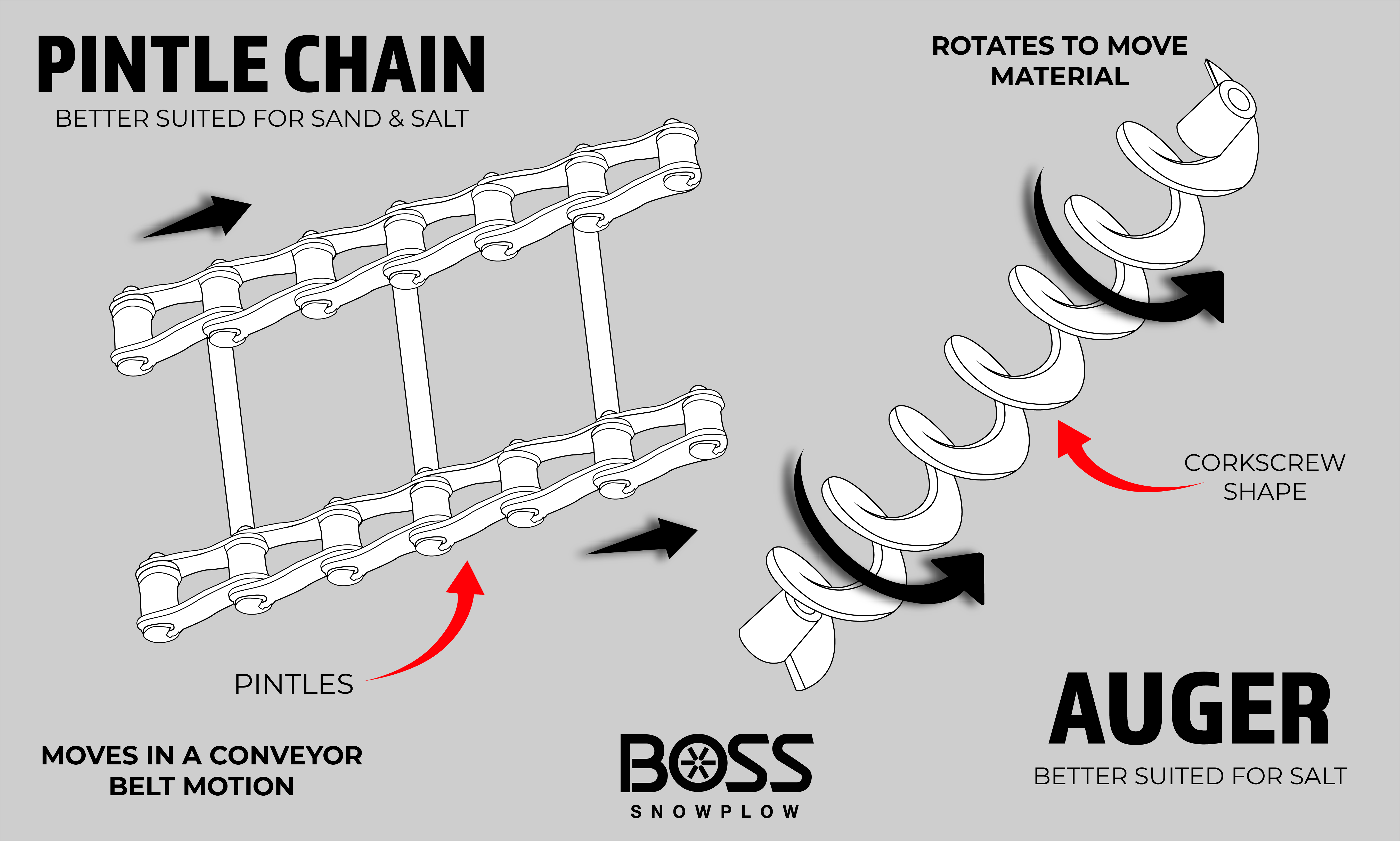
Auger vs. Pintle Chain: At a Glance
|
Feature |
Auger Feed System |
Pintle Chain Feed System |
|
Best for |
Dry, free-flowing salt |
Sand, salt/sand mixes and wetter material |
|
Material flow |
More controlled and consistent |
Higher maximum flow |
|
Maximum BOSS flow rate |
Approximately 2.3 cu. ft./min. |
Approximately 4 cu. ft./min. |
|
Material versatility |
Best with free-flowing material |
Handles a wider range of material |
|
Jamming |
More susceptible to rocks and obstructions |
Less susceptible to jamming from larger material |
|
Maintenance |
Generally lower |
More components require regular maintenance |
|
Spread consistency |
More even material feed |
Slightly less even material feed |
|
Best fit |
Operators prioritizing consistency and simpler maintenance |
Operators prioritizing material versatility and high-volume application |
What Is an Auger Hopper Spreader?
Definition
Auger Hopper Spreader: A spreader that uses a rotating steel screw to move material toward the discharge system.
An auger hopper spreader uses a rotating steel screw, or auger, to move deicing material from the hopper toward the discharge chute and spinner. As the auger rotates, its flighting pulls material forward in a controlled manner.
Because the auger has fewer moving components than a pintle chain system, it can be a simpler option to maintain. The controlled movement of material also helps produce a more consistent feed and spread pattern.
BOSS auger systems are designed for materials such as dry, free-flowing salt. BOSS auger hopper spreaders can also be equipped with features such as inverted V-baffles and material-flow assistance to help maintain consistent feeding.
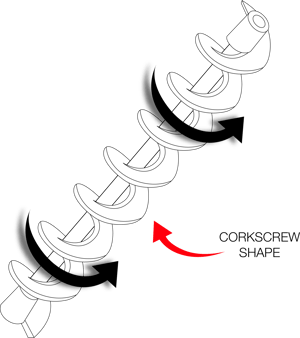
Advantages of an Auger Feed System
-
-
More controlled and consistent material flow
-
Generally fewer moving parts than a pintle chain system
-
Lower feed-system maintenance requirements
-
Approximately 2.3 cubic feet per minute maximum flow on applicable BOSS systems
-
Designed for dry, free-flowing materials
-
Can break up or crush some chunks of salt and sand as material moves through the auger
-
Many systems offer automatic jam-clearing and motor-protection features
-
Inverted V-baffles can help control material weight and flow onto the auger
-
Optional vibrator systems can help maintain material flow
-
Limitations of an Auger Feed System
-
-
Lower maximum material flow than a pintle chain
-
Large rocks or other hard obstructions can still cause an auger jam
-
Wet material can restrict material flow
-
Moisture can cause salt or sand to freeze into solid masses
-
Bridging can occur when frozen material forms a solid mass above the feed system
-
A vibrator can improve material flow but cannot overcome material that has completely frozen together
-
How Do Auger Spreaders Handle Material Jams?
Many auger hopper spreaders use a jam-protection system that helps protect the auger motor from overload. When the system detects that the auger has become jammed, it can automatically reverse and then move forward several times in an attempt to clear the obstruction.
If the obstruction cannot be cleared automatically, the spreader controller can indicate that a jam has occurred. This alerts the operator to stop and manually clear the obstruction before serious damage occurs to the auger motor.
This protection is particularly useful when spreading material that may contain rocks, frozen chunks or other obstructions.
How Do Inverted V-Baffles Help an Auger Spreader?
Definition
Inverted V-Baffle: A hopper component that helps control the weight and flow of material onto the auger.
Many auger hopper spreaders use inverted V-baffles to reduce the weight of material resting directly on the auger. The baffles help control how material moves toward the feed system and reduce the load placed on the auger during startup.
Reducing the material load on the auger can help protect the drive system and auger motor. Without proper material-flow control, the weight of a full hopper can place significant stress on the auger when it initially starts moving.
How Do Vibrators Help an Auger Spreader?
Many auger hopper spreaders can be equipped with vibrator systems that agitate the material and help maintain consistent flow toward the auger.
A vibrator can help loosen salt and other spreading materials around obstructions and reduce the likelihood of material hanging up in the hopper. However, vibration cannot overcome material that has completely frozen into a solid mass because of moisture or water intrusion.
For that reason, operators should keep spreading material as dry as possible and avoid leaving a filled hopper sitting for extended periods in very cold conditions.
When Should You Choose an Auger Spreader?
Choose an auger feed system when your operation primarily uses dry, free-flowing salt and you want consistent material delivery with a relatively simple feed mechanism.
An auger is particularly well suited to contractors and property managers who prioritize predictable material application and lower feed-system maintenance.
What Is a Pintle Chain Hopper Spreader?
Definition
Pintle Chain Hopper Spreader: A spreader that uses a conveyor-style chain to move material from the hopper to the discharge system.
A pintle chain hopper spreader uses a conveyor-style chain to move deicing material from the hopper to the discharge chute and spinner. The chain's large conveying surface allows it to move a greater volume of material and handle a broader range of material types.
BOSS pintle chain systems are particularly well suited for sand, salt/sand mixtures and wetter materials. The pintle chain design is also less susceptible to jamming from larger pieces of material than an auger system.
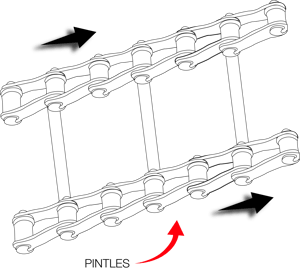
Advantages of a Pintle Chain Feed System
-
-
Higher maximum material flow
-
Approximately 4 cubic feet per minute on applicable BOSS systems
-
Handles a wider range of deicing materials
-
Well suited for sand and salt/sand mixtures
-
Better suited to wetter material
-
Less susceptible to jamming from rocks and larger material
-
Useful for high-volume material application
-
Limitations of a Pintle Chain Feed System
-
More moving components than an auger
-
Requires regular chain maintenance
-
Chain, sprockets, bearings and tensioning components require attention
-
Material feed can be somewhat less consistent than an auger system
When Should You Choose a Pintle Chain Spreader?
Choose a pintle chain feed system when you regularly spread sand, salt/sand mixtures, wetter material or need higher material flow.
For operations where material versatility is more important than having the simplest possible feed mechanism, a pintle chain can be the better choice.
Auger vs. Pintle Chain: Which Is Better for Salt?
For dry, free-flowing salt, an auger feed system is generally the better choice.
The auger provides controlled material movement and a consistent feed, while requiring fewer moving components than a pintle chain.
However, the condition of the salt matters. Salt that has absorbed moisture and frozen into large masses can create material-flow problems in any hopper spreader. Keeping material as dry as possible helps reduce bridging and flow issues.

Learn how to track, optimize and reduce salt usage with BOSS deicing equipment and smarter material management strategies.
Learn How to Reduce Salt Usage →
Which Is Better for Sand?
A pintle chain is generally the better choice for spreading sand.
Sand is more prone to moisture and material-flow issues than dry salt. The conveyor-style pintle chain is designed to move larger and heavier material through the hopper and is less susceptible to obstruction from rocks or larger particles.
BOSS specifically identifies pintle chain systems as a strong choice for sand and salt/sand mixtures.
Which Handles Wet Material Better?
Pintle chain systems generally handle wet material better than auger systems.
A pintle chain's conveyor-style design allows it to move material that may be more difficult to feed through an auger. This makes pintle chains a good fit for operations where material moisture is difficult to control.
That does not mean a pintle chain is immune to material-flow problems. Material condition, storage and hopper configuration can all affect performance.
Which Has the Higher Material Flow Rate?
A pintle chain has a higher maximum material flow rate than an auger in the applicable BOSS systems.
-
Auger: 2.3 cu. ft./min.
-
Pintle chain: 4 cu. ft./min.
That makes the pintle chain particularly useful when high-volume material application is a priority.
Definition
Material Flow: The movement of deicing material from the hopper through the feed system and onto the spinner.
Which Hopper Spreader Requires Less Maintenance?
An auger generally requires less feed-system maintenance because it has fewer moving components than a pintle chain.
A pintle chain includes components such as chain links, sprockets, bearings and tensioning devices. These components need regular inspection and maintenance, particularly when the spreader is exposed to corrosive deicing materials.
That said, proper maintenance is important for both systems. Following the maintenance procedures for your specific BOSS spreader can help extend equipment life and maintain reliable operation.
Which Is Less Likely to Jam?
A pintle chain is generally less susceptible to jamming from rocks, larger particles and other obstructions.
An auger can encounter problems when large debris becomes lodged in the feed mechanism. Some BOSS auger systems incorporate jam-clearing functionality that can reverse the auger to help clear an obstruction.
Neither system eliminates the need to use appropriate material for the spreader.
What Is Bridging in a Hopper Spreader?
Definition
Bridging: A condition where spreading material freezes or compacts into a solid mass above the feed system, preventing material from flowing into the auger or conveyor.
Bridging occurs when spreading material freezes or compacts into a solid mass above the feed system, preventing material from flowing down into the auger or conveyor.
The result is similar to a bridge over a flowing river: material may remain in the hopper, but a solid mass forms across the opening above the feed mechanism, preventing the material below from reaching the feed system.
Moisture is one of the primary contributors to bridging. Salt or sand that becomes wet can freeze together, particularly when a loaded hopper sits for an extended period in very cold conditions.
Operators can help reduce bridging by:
-
Keeping spreading material as dry as possible
-
Protecting material from water intrusion
-
Avoiding leaving a filled hopper sitting for extended periods in very cold weather
-
Using the appropriate vibrator system to help keep material loose
-
Following the manufacturer's recommendations for material storage and spreader operation
A vibrator can help agitate material and maintain flow around smaller obstructions, but no vibration system can reliably overcome material that has frozen into a solid mass. Preventing moisture intrusion is therefore an important part of maintaining consistent hopper-spreader performance.
Does BOSS Offer Both Auger and Pintle Chain Hopper Spreaders?
Yes. BOSS offers hopper spreaders with both auger and pintle chain feed systems.
The current VBX+ lineup includes 1.5-, 2- and 3-cubic-yard configurations with both auger and pintle chain options. The VBX 3000 is an auger-only configuration for compact UTV applications.
The MBX+ utilizes the pintle chain feed system exclusively as it is a large capacity spreader designed for demanding contractor grade applications where high flow rate is essential.
This allows operators to select the feed mechanism based on the material and application rather than changing their material-handling strategy to fit a single feed design.
Auger vs. Pintle Chain: How to Choose
If you're still deciding between the two, start with these four questions:
1. What material do you spread most often?
-
Primarily dry salt: Consider an auger.
-
Sand or salt/sand mix: Consider a pintle chain.
-
Wetter material: A pintle chain may be the better fit.
Use the BOSS Spreader Material Guide to see which deicing materials are compatible with different BOSS spreader models.
Explore the Spreader Material Guide →2. How much material flow do you need?
-
Moderate, controlled flow: Consider an auger.
-
Higher-volume application: Consider a pintle chain.
3. How much maintenance are you willing to perform?
-
Simpler feed system: Auger.
-
Willing to maintain additional moving components for greater material versatility: Pintle chain.
4. What are your typical operating conditions?
Think beyond the type of material. Consider moisture, freezing, contamination, rocks or debris, application rates and the size of your routes.
The best hopper spreader feed system isn't necessarily the one with the highest flow rate. It's the one that matches the material and operating conditions your crew encounters most often.
BOSS Hopper Spreader Maintenance Tips
Regardless of feed-system type, regular maintenance is critical when spreading corrosive deicing materials.
For BOSS hopper spreaders:
-
Follow the maintenance schedule specified for your model.
-
Keep electrical connections supported and protected with dust/weather caps when disconnected.
-
Keep spreading material as dry as practical.
-
Inspect feed-system components regularly.
-
For pintle systems, pay particular attention to chain condition, lubrication and tension.
-
For auger systems, inspect the auger, bearings and material-flow components.
-
Avoid routinely flooding electrical connections, motors and drive components with water.
-
Properly clean and dry the spreader before off-season storage.
FAQ: Auger and Pintle Chain Hopper Spreaders
What is the difference between an auger and a pintle chain spreader?
An auger uses a rotating steel screw to move material toward the discharge chute, while a pintle chain uses a conveyor-style chain to transport material. Augers generally provide more controlled material flow, while pintle chains provide higher maximum flow and greater material versatility.
Is an auger or pintle chain better for salt?
For dry, free-flowing salt, an auger is generally the better choice because it provides controlled material movement and a consistent feed. A pintle chain can also spread salt and is better suited when the operation also uses sand, salt/sand mixes or wetter materials.
Is a pintle chain better for sand?
Generally, yes. A pintle chain is better suited for sand because its conveyor-style feed system can handle larger and wetter material more effectively than an auger.
Which hopper spreader has a higher flow rate?
A pintle chain has the higher maximum flow rate in applicable BOSS systems, at approximately 4 cubic feet per minute compared with approximately 2.3 cubic feet per minute for an auger.
Which spreader feed system requires less maintenance?
An auger generally requires less feed-system maintenance because it has fewer moving components. Pintle chains require maintenance of the chain, sprockets, bearings and tensioning components.
Can a pintle chain spread salt?
Yes. BOSS pintle chain spreaders can distribute salt as well as sand and salt/sand mixtures. They are particularly useful when an operation needs to spread multiple types of deicing material.
Can an auger spread sand?
Auger systems can be used with certain sand applications depending on the specific spreader and material conditions. However, BOSS identifies pintle chain systems as the more suitable option for sand and materials prone to moisture.
What causes a hopper spreader to bridge?
Bridging occurs when salt, sand or another spreading material freezes or compacts into a solid mass above the feed system, preventing material from flowing into the auger or conveyor. Moisture and water intrusion are major contributors. Keeping material dry, avoiding extended storage of a loaded hopper in very cold conditions, and using a vibrator system where appropriate can help reduce bridging.
Can an auger break up frozen salt?
An auger can break up or crush some chunks of salt and sand as they move through the feed system. However, if moisture causes material to freeze into a large solid mass inside the hopper, an auger cannot reliably overcome the obstruction. Keeping material dry is the best way to prevent this condition.
How does an auger spreader protect its motor from jams?
Many auger spreaders use a jam-protection system that detects when the auger is overloaded or obstructed. The system can reverse and then move the auger forward several times to attempt to clear the jam. If the obstruction remains, the controller can alert the operator so the obstruction can be manually cleared before serious motor damage occurs.
Do hopper spreaders need a vibrator?
A vibrator can help maintain material flow by agitating salt or other spreading material and keeping it loose around the feed system. However, a vibrator cannot overcome material that has completely frozen into a solid mass. Keeping the spreading material as dry as possible remains important.
