


Auger vs Pintle Chain: Choosing the Best Hopper Spreader Type
When it comes to finding the best hopper spreader type for your operation, understanding how material feed systems work is essential. Whether you’re running a VBX+, FORGE, or other BOSS hopper spreader, knowing the differences between auger vs pintle chain systems can help you make the right choice for winter performance.
What Are the Two Types of Hopper Spreaders?
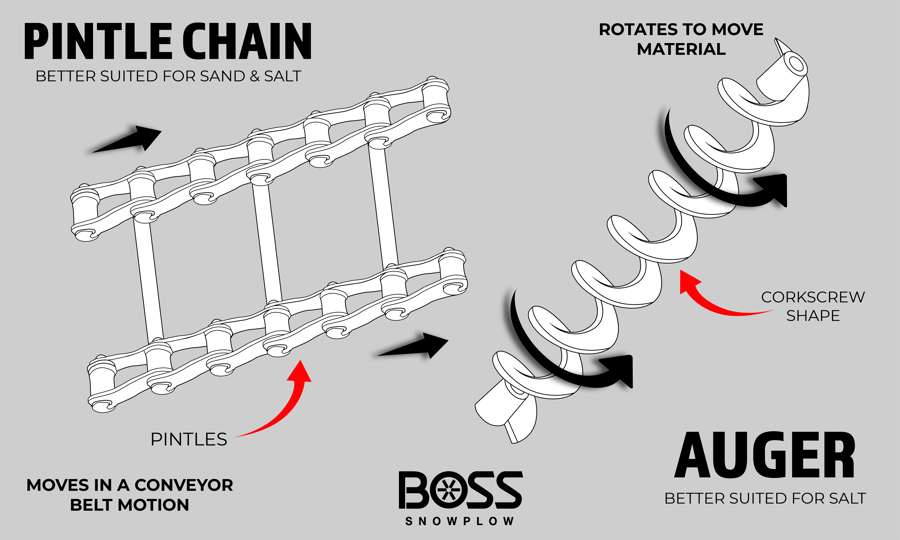
There are two main feed system options for electric V-box hopper spreaders:
-
Auger
-
Pintle Chain
Both systems are available in the BOSS VBX and FORGE spreader lines, with one exception — the VBX 3000 comes in auger only. These systems handle material differently and are built for different use cases.
Regional Preferences
Across the U.S., auger systems are more commonly used in the Midwest and Ohio Valley, while pintle chains are preferred in New England. These habits are often based on what contractors are used to or the typical materials used in those areas.
Auger Feed Systems: Simpler and More Controlled
Auger systems use a steel corkscrew that pulls salt toward the spinner, offering a steady, even flow of dry material. It’s ideal for free-flowing salt and comes with fewer moving parts, making it easier to maintain.
Benefits:
-
Smoother material feed and consistent spread pattern
-
Fewer moving parts reduce maintenance needs
-
Built-in jam-clearing function
-
Includes inverted V baffles to reduce material pressure on the auger
-
Works best with dry, loose salt
Limitations:
-
Lower flow rate: 2.3 cu ft/min
-
Struggles with wet or frozen material
-
Can jam if material contains rocks or debris
Pro tip: Always keep material dry to avoid "bridging," where salt freezes into a block and stops the flow.
Pintle Chain Feed Systems: Versatile and High-Volume
Pintle chains use a wide conveyor-style chain to move material, making them great for sand, salt/sand mixes, or wetter substances. They have more moving parts but are better suited for heavier jobs.
Benefits:
-
Higher flow rate: 4 cu ft/min
-
Handles a wider range of materials
-
Less likely to jam under heavy loads
-
Good for sand-heavy or wet operations
Limitations: 
-
More maintenance (chains, sprockets, bearings)
-
Slightly less consistent spread pattern than auger
-
Chains must be greased and tensioned regularly
VBX+ Compatibility
BOSS VBX+ spreaders are available in both feed types, with support for various upgrades like:
-
Vibrator kits
-
Inverted V baffles
-
Brine-compatible accessories
Just note: VBX 3000 is auger only.
Maintenance Tips for Both Systems
-
Auger systems: Grease bearings every 20 hours
-
Pintle systems: Grease chain links regularly, apply WD40 or PB Blaster when storing
-
Always support harness connectors, use dust/weather caps when disconnected
-
Avoid rinsing your spreader with water too often; blow it out or air dry instead
Choosing between auger vs pintle chain comes down to material type, job size, and your willingness to handle maintenance. Whether you're upgrading a VBX+ hopper spreader or starting fresh, both systems are reliable in the right setting.
Want more details or to browse hopper spreader accessories? Visit www.bossplow.com/products to learn more.