

Reduce Cleanup with Liquid Deicing: A Cleaner Winter Solution
When people think about snow removal, they usually focus on plowing and salting—but one of the most overlooked parts of winter maintenance is what comes next: the cleanup. After a storm, the condition of sidewalks, entryways, and interior floors can make or break a client’s impression of your work.
If you're looking to deliver cleaner lots with brine and reduce the mess that comes after a snow event, liquid deicing is a smart, professional solution.
The Problem with Granular Salt
Granular rock salt is often overapplied, especially in high-traffic areas like sidewalks and entrances. When used in excess, it doesn’t just melt ice—it also creates problems like:
-
Salt tracking into buildings
-
White residue left on floors and carpets
-
Slippery surfaces from leftover product
-
Long-term damage to infrastructure
The result? Facilities that stay dirty long after the snow is gone—and increased cleaning costs to go with it.
 Why Liquid Deicing Leads to Cleaner Properties
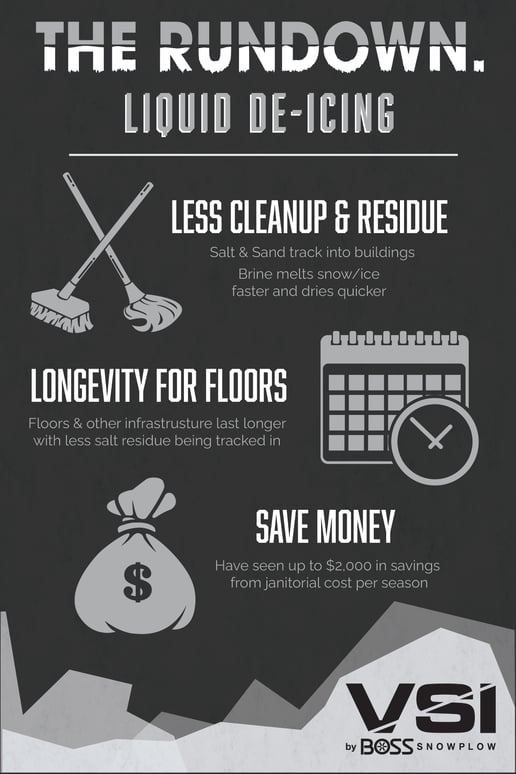
Using a liquid deicer—typically a salt brine solution—provides even coverage with less material. It starts working immediately and dries clean, leaving behind no granules to be tracked indoors.
Compared to granular salt, liquid deicing offers:
-
Up to 75% less salt use for the same or better result
-
Minimal tracking into buildings
-
Surfaces that are dry and clean post-storm
-
No residual piles of salt sitting on sidewalks for days
🖼️ Visual suggestion: A side-by-side image of a brine-treated entrance vs a salt-treated one after a storm—highlighting leftover salt, tracked mess, or floor damage.
Lower Janitorial and Maintenance Costs
Contractors and businesses that switch to brine often report notable cost savings. In fact, some have reduced janitorial costs by as much as $2,000 per season simply by cutting down on post-storm cleaning.
Less mess also means:
-
Reduced wear on entryway flooring and tile
-
Longer-lasting mats and finishes
-
Fewer labor hours spent sweeping, vacuuming, and mopping
It’s a simple change with real impact—both visually and financially.
.png?width=202&height=269&name=MicrosoftTeams-image%20(5).png)
Protect Floors and Infrastructure
Rock salt isn’t just messy—it’s abrasive. Over time, it can degrade:
-
Concrete
-
Grout and tile
-
Entry thresholds
-
Interior metal fixtures
Because liquid deicing dries clean, it helps preserve the life of your surfaces while keeping interiors looking better for longer.
A Better Selling Point for Contractors
If you’re a snow professional bidding on contracts, cleanup matters. Highlighting how you’ll use brine to reduce salt mess and protect flooring can set your service apart—especially for clients who manage retail, office, or healthcare spaces where cleanliness is a priority.
Liquid deicing doesn’t just work during the storm—it helps after, too. For cleaner lots, less indoor mess, and happier clients, switching from rock salt to brine can be one of the simplest upgrades to your winter service.
Want help explaining the benefits of liquid deicing to your customers? Let me know and I’ll help you turn this into a visual one-pager or proposal insert.