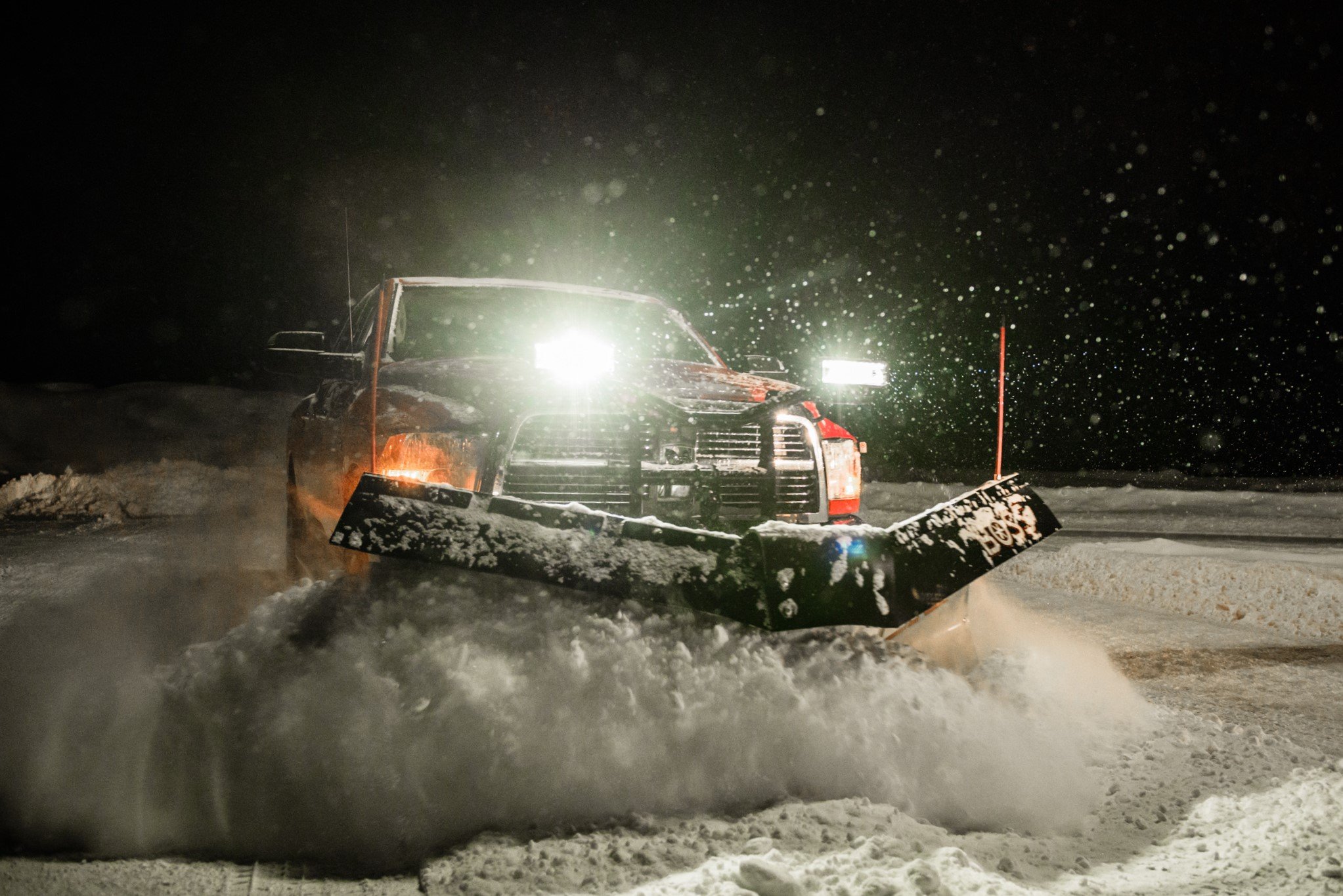
Eight Snow Plowing Safety Tips
As winter weather continues to fall, we know you’re eager to jump in the cab of your truck and restore order for your community. To keep you, your truck, your plow, and those around you safe during the plowing season, follow this BOSS safety checklist. These eight snowplow safety tips will help reduce risk, prevent costly mistakes, and support a safer working environment.
⚠️ Inspect Your Vehicle Before Plowing
It is your responsibility to inspect your vehicle before plowing to ensure it is capable of the job.
-
Check that your tire pressure is adequate to ensure proper traction.
-
Inspect headlights on the vehicle and plow, as well as taillights and any other lights being operated.
-
Check for any signs of damage on your plow, such as cracked welds or leaking hydraulics.
-
Review all connections between the truck and plow to make sure they are secure.
-
Inspect the cutting edge to check the wear point—ensure it isn’t worn to the point where the main portion of the blade meets the ground.
-
Confirm that the vehicle’s weight is balanced. Add weight to the bed of the truck if necessary.
⚠️ Practice Safe Plow Transportation
When transporting your plow between jobs, always position your blade correctly to avoid damage or obstruction.
-
Angle straight blades to the right.
-
Keep V-blades in a retracted position.
-
Keep the blade as far off the ground as possible—without blocking headlights or your vision.
-
Drive at 45 mph or under while transporting your plow.
-
Power off plow controls to avoid accidental operation during travel.
⚠️ Follow Proper Plowing Techniques
While on the job, follow these critical snowplow safety tips:
-
Always wear your seat belt.
-
Start moving your vehicle before dropping the blade.
-
Know where snow piles should go before you begin. Avoid piling snow near fire hydrants, mailboxes, or dumpsters.
-
Never rely solely on mirrors when moving in reverse—look over your shoulder.
-
Keep plowing speeds under 14 mph.
⚠️ Look Out for Hidden Objects
Before the snow plowing season begins, perform preseason site inspections. This helps identify and mark obstructions that may be hidden during a storm. Being mindful of your surroundings prevents damage to your truck, your plow, and the site itself.
⚠️ Know Your Surfaces
Adjust your plow shoes based on the surface you're working on:
-
When plowing dirt or gravel, lower the plow shoes to raise your blade and avoid scraping the surface.
-
When plowing asphalt or concrete, raise the plow shoes to allow the blade to scrape as close to the surface as possible.
⚠️ Avoid Overheating While Plowing
Overheating can be costly. Always check your vehicle's temperature gauge when plowing or transporting your plow. If the vehicle overheats:
-
Stop and correct the issue.
-
Adjust the height of your blade to improve airflow to the radiator.
-
Continue to monitor your temperature gauge.
⚠️ Use Beacon Warning Lights
Protect yourself and others from potential collisions by using a BOSS beacon warning light.
-
Bright flashing strobes and rotating beacons improve visibility to oncoming traffic.
-
They give other drivers time to slow down or change lanes.
-
Always activate your warning lights while plowing or operating in low visibility.
⚠️ Be Nice to the Hydraulics
When you've completed a job:
-
Lower the blade to the ground.
-
Turn off plow controls to relieve pressure on the hydraulic system.
-
This helps extend the life of your plow and prevents unintentional movement.
By following this BOSS safety checklist, you can improve job site safety, reduce downtime, and make sure your snow season runs smoothly. These steps can make a major difference for contractors and teams of all sizes.