

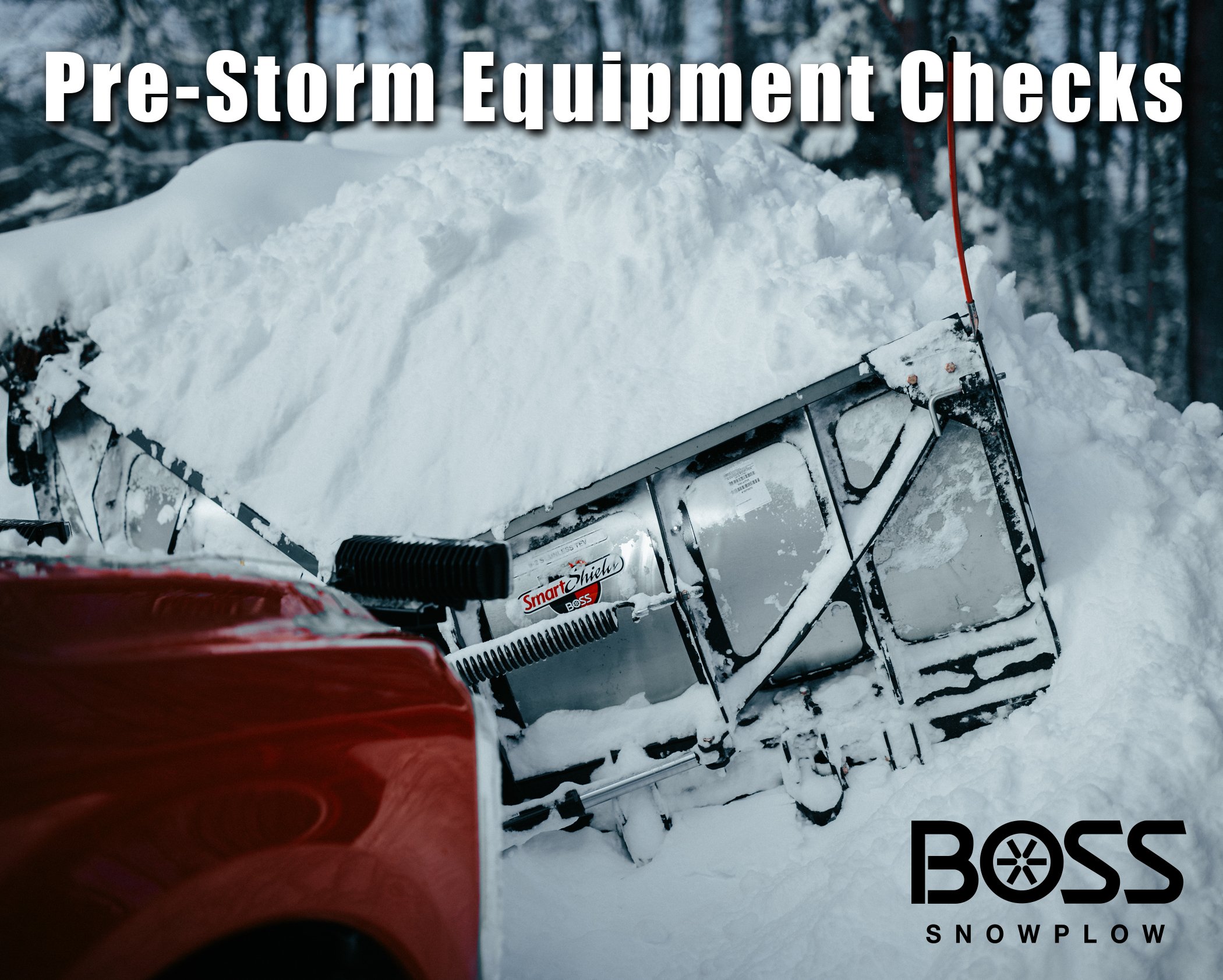
Pre-Storm Snowplow Equipment Checks That Save You When the Storm Hits
Pre-storm snowplow inspections should include checking electrical connections, hydraulic systems, cutting edges, trip springs, fasteners, lights, and the truck’s battery and charging system. Taking a few minutes to inspect your equipment before a winter storm can help identify problems before they cause equipment failures, downtime, or delays during snow removal operations.
Before a storm, inspect your snowplow’s electrical connections, controller, hydraulic system, cutting edge, plow shoes, trip and return springs, fasteners, vehicle mount, lights, and safety equipment. Also check the truck’s battery and charging system. A quick pre-storm inspection can help catch issues before they become problems in the middle of a snow event.
Essential Snowplow Equipment Checks Before a Winter Storm
Before heading out, take a few minutes to run through these critical checks:
-
-
-
Inspect electrical connections and harnesses for wear, corrosion, or loose fittings
-
Power up the controller and confirm that all functions are working properly
-
Check hydraulic lines, wear points, and moving parts
-
Verify lights, visibility, and safety equipment
-
-
These quick checks can catch issues that might otherwise sideline a truck during a storm.
Complete Snowplow and Truck Inspection Checklist
For maximum reliability, a more detailed inspection should be part of every pre-storm routine:
-
-
-
Inspect all bolts and fasteners on the plow
-
Inspect and re-torque fasteners in the vehicle mount
-
Inspect all welds in the plow structure and vehicle mount
-
Check the cutting edge and plow shoes; replace if necessary
-
Check hydraulic fluid and change it as recommended
-
Check trip and return springs. As a general rule of thumb, a business card should slide between the coils at the center of the spring
-
Grease the vertical pin and all pivot points
-
-
Electrical: Connections, harnesses, controller, battery
Hydraulics: Fluid, hoses, wear points, moving parts
Plow: Cutting edge, shoes, springs, fasteners, welds
Vehicle: Mount, lights, charging system, safety equipment
Lubrication: Vertical pin and pivot points
Each of these steps helps reduce wear, prevent avoidable failures, and keep equipment performing consistently when it is under heavy load.
Emergency Snowplow Parts Every Contractor Should Carry
Even with the best preparation, equipment issues can happen. Having an emergency parts kit on hand can help turn a potential breakdown into a quicker repair and get the truck back to work.
Consider stocking:
-
-
-
Hydraulic fluid and hoses
-
Solenoids and fuses
-
Trip and return springs
-
Safety strobe and flares
-
Tow strap and a shovel
-
Basic hand tools
-
-
Also, have the truck’s battery and charging system inspected before the season and checked as needed during the winter. Cold temperatures can put additional demands on a truck’s electrical system.
Pre-Storm Equipment Checklist: Key Takeaways for Snow Contractors
Consistent pre-storm inspections help reduce avoidable breakdowns, extend equipment life, and keep snow plow trucks operating efficiently during peak winter events. From checking hydraulic systems and electrical connections to inspecting cutting edges, springs, fasteners, and vehicle mounts, proactive maintenance helps protect uptime and keep your operation ready for the next storm.
Build your pre-storm inspection into your normal snow route routine. Checking the same critical components before each major event makes it easier to spot wear, identify developing problems, and keep equipment ready to work.
Frequently Asked Questions
What should I check on my snow plow before a storm?
Before a snow event, inspect electrical connections, hydraulic hoses, the controller, lights, cutting edges, trip springs, fasteners, vehicle mount hardware, and the truck’s battery and charging system. A complete inspection can help identify potential problems before they cause equipment failures during snow removal operations.
How often should a snow plow be inspected?
Snowplows should be inspected before every major storm and receive a full maintenance inspection before and after each season.
What emergency parts should I keep in a snow plow truck?
A snowplow emergency kit should include hydraulic fluid, hydraulic hoses, fuses, a solenoid, trip and return springs, safety flares, a tow strap, a shovel, and basic hand tools.
Why is pre-storm snow plow maintenance important?
Pre-storm maintenance helps reduce equipment downtime, extend component life, support operator safety, and keep snow plow trucks operating efficiently during winter weather events.